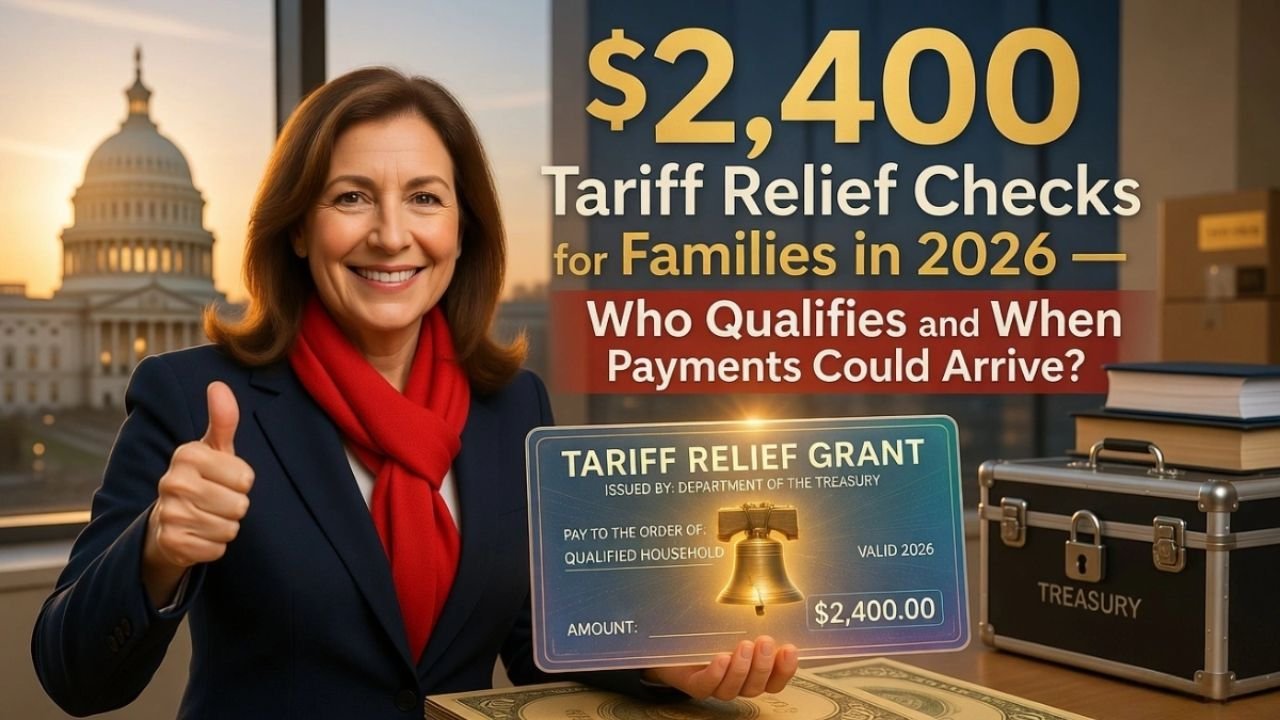
In 2026, discussions around potential tariff relief payments have sparked widespread attention, particularly claims that families could receive up to $2,400. These payments are tied to proposals that would return a portion of government-collected import tariffs back to households. However, it is crucial to understand that this plan is not yet approved or guaranteed, and remains a policy proposal under discussion.
What the $2,400 Figure Means
The $2,400 number originates from political discussions and proposed legislation. One version of the plan suggested that eligible individuals could receive at least $600 per person, which would amount to roughly $2,400 for a family of four.

It is important to note that this figure is speculative. Actual payments, if ever approved, could vary depending on family size, income level, and the final structure of the program. No legislation has confirmed the amount, eligibility, or timeline.
Who Could Qualify
If the proposal were enacted, eligibility would likely focus on low- and middle-income households. Early discussions indicate potential criteria could include:
- Families earning below a set income threshold, possibly under $100,000 annually
- U.S. taxpayers or citizens
- Households with dependents, which could qualify for higher total payments
Final eligibility rules have not been defined. Until legislation is passed, any list of qualifying households is purely speculative.
Current Status of the Payment Plan
At this time, no $2,400 checks have been authorized or scheduled. Key points regarding the current situation include:
- Congress has not passed any law approving these payments
- No official payment dates or IRS distribution mechanisms exist
- The proposal remains under discussion with uncertain political support
Experts also caution that funding such payments could be challenging, as revenue from tariffs alone may not cover the total cost of a nationwide distribution.
Possible Payment Timeline if Approved
Some statements from policymakers have suggested that, if approved, payments could potentially arrive in late 2026. However, even in a best-case scenario, several steps would need to occur first:
- Legislation must pass Congress authorizing the relief payments
- Funding must be allocated to cover the approved amount
- The IRS would need time to set up a distribution system and notify eligible households

This means that even if the plan moves forward, payments would not be immediate, and the schedule could shift based on administrative and legislative factors.
Reality Check on Viral Claims
Online posts and social media often claim that $2,000 or $2,400 checks are already confirmed. These claims are misleading. Key realities include:
- No new federal stimulus checks have been approved for 2026
- Tariff-based “dividend” or relief checks are still proposals, not law
- Similar past proposals, while discussed, have often failed to materialize
Families should exercise caution and rely on verified government sources for information.
What Families Should Do
Until official announcements are made, households should:
- Treat all $2,400 check claims as speculative
- Monitor announcements from Congress and the IRS for verified updates
- Ensure tax filings and banking information are accurate in case a program is approved in the future
Staying informed will allow families to act quickly if a tariff relief program is ever implemented.
Conclusion
The $2,400 tariff relief payment concept for 2026 is a proposal, not a confirmed program. While it has generated public interest, there is currently no official eligibility list, payment schedule, or funding guarantee. Families should rely only on official government sources for information and treat viral claims with caution.
If implemented, the program could provide meaningful financial support, but for now, it remains uncertain and entirely speculative.
Disclaimer: This article is for informational purposes only. Payment programs, eligibility rules, and timelines are subject to government approval and may change. Readers should consult official U.S. government resources for verified updates.